The Table
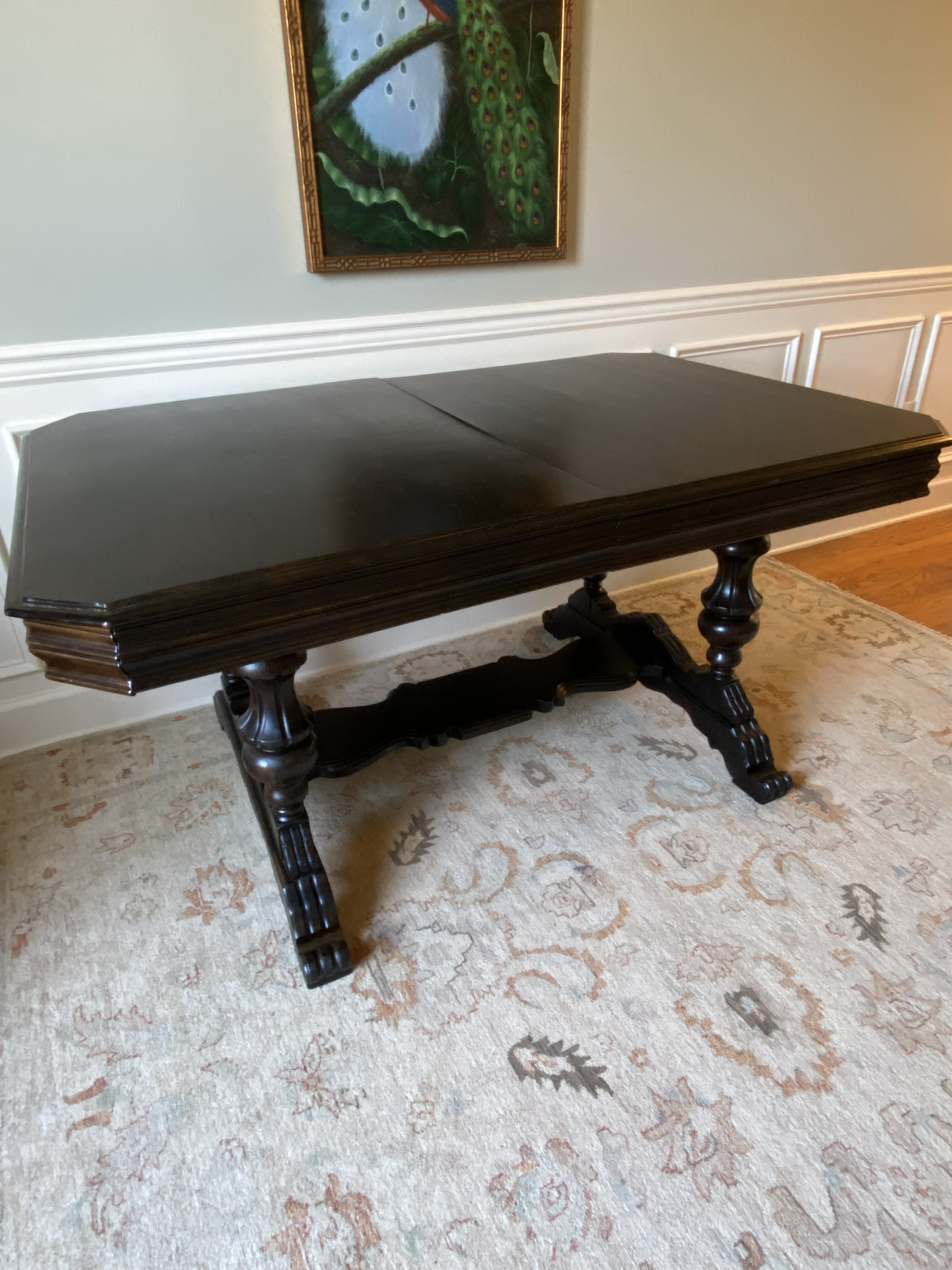
We were loading the antique table, buffet, and china cabinet in the truck. My daughter had purchased the furniture from my mother's estate, partially because she wanted the furniture to remain in the family for continuity with our past, and partially because my history was linked to the table.
The table and other pieces of furniture had been moved to my grandparent's house in the 1930's when my Aunt Pearl's marriage had failed. The furniture that was sent there for safekeeping was of a much finer quality than the furnishings my grandparents had possessed. The furniture would remain in the house for some 70 years.
On December 16, 1938, I was delivered on that table. Exactly 5 years later to the day, on December 16, 1943, my brother Jess was delivered on the same table. Home deliveries were common in those days.
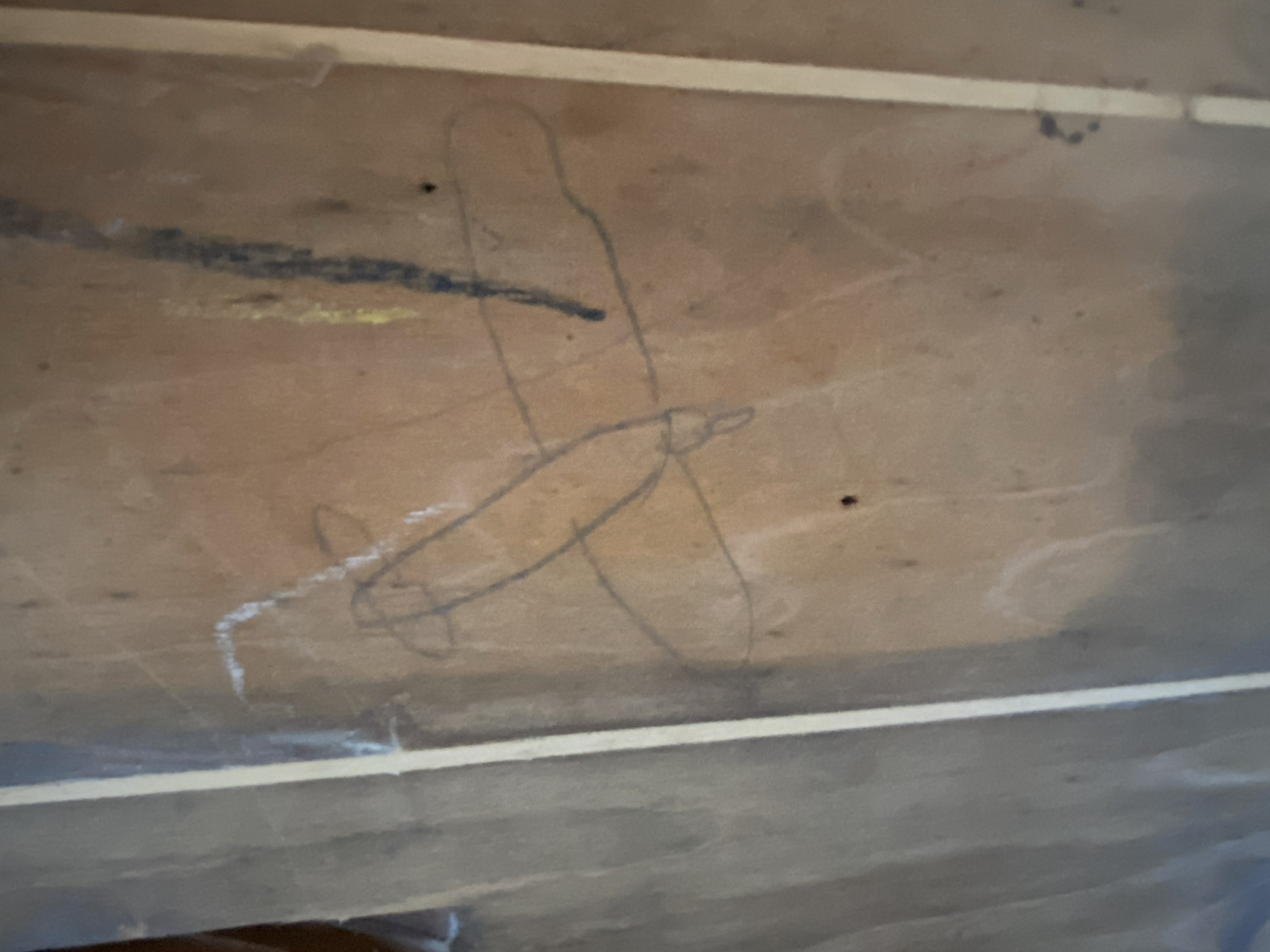
As we were loading the furniture, I was having vague recollections of a small boy playing under the table. I remembered reaching up and drawing the picture of an airplane on the unfinished wood of the underside of the table. As soon as practical, I looked at the underside of the table, and there it was, some 58 years later. The pencil drawing was small, drawn in the uncertain hand of a 5 year old. My dad was in the air force in the European theater of war, and I was consumed by anything having to do with airplanes. I could not read or write, but I could identify the profile of most of our military airplanes, especially the B-24 Liberators of my father's squadron, based in Italy.
My mother and I had moved into the house with my grandparents since there was not enough money to support a separate household on my father's military allotment. Most of my time was spent in the large room that was not only the geographic center of the house, but was the center of life in the house. The table occupied the middle of this room. This room had six doors. If you entered the room from the front porch, to the immediate right, facing south, would be the door to the kitchen. On the east wall, one door led to the small dressing room leading to the only bathroom, and the other door entered my grandfather's bedroom. The north wall had a closet door and a door leading to two other rooms. Between the closet and this door, the space was occupied by a large cast iron stove. This stove was a source of considerable pride for my grandfather. He never missed an opportunity to announce to someone that this was a WARM MORNING stove. The stove was round in shape and a little over four feet high. Near the bottom of the stove, a door gave access for adding coal or wood. There were two small observation holes near the top with sliding covers that permitted seeing into the stove, or regulating airflow into the stove. Evidently, replacing the fireplace with this stove was something of an accomplishment. The stove further reinforced this room's dominant role in the house since it was the only source of heat for the large house. There was the small pot bellied stove in the kitchen that was fired up on occasion to heat bath water, but it was rarely used for heating the kitchen.
Most meals were taken in the kitchen, and I can only recall a few times when the large table was used for family gatherings. Most other activities, however, were conducted around the table.
One of the more memorable experiences that I recall in this room was practicing wartime blackout drills. In 1942 and 1943, the outcome of the war in Europe and the Pacific was still very much in doubt. Government officials had to consider the unthinkable, and consider the possibility that war might come to our shores. We were required to have blackout curtains over the windows during drills and to extinguish all light that could escape to the outside. At predetermined times, the city officials would announce a blackout drill, and would interrupt all electricity to the city. To ensure compliance, black wardens were assigned to each city block to go from house to house to ensure that no light from candle or lantern or any other source would escape that would reveal the location of the city during a night attack. I recall peeking out behind the blackout curtains to try to get a glimpse of the block warden ghosting from house to house, looking for stray light sources. On one occasion the block warden knocked on our door and talked with my grandfather. At other times I would stand in front of the stove, staring at the two small openings, since the fire inside the stove was the only source of light during the drill. This was pretty exciting stuff for a small boy.
Every week, Mama, my grandmother, would listen to two radio programs without fail. The first was The Grand Ol' Opry, and the other was a mystery program called Inner Sanctum. This show opened and ended with the long drawn out sound of a door creaking open, and creaking closed again with a thud that was calculated to terrify 5 year old boys. I didn't know what the story was about, but there was no doubt that it was bad. I was convinced that something terrible was going to get me when I heard the creaking door. I would get against the wall behind the stove in order to not worry about something sneaking up behind me. Now I could keep a lookout both left and right, and also keep an eye under the big table, just in case something was lurking under there. The only problem now was that pesky closet door just two feet to my left, sure to harbor some unnamed horror that would pounce just as the door started to creak on the radio. On the premise that the devil you know is better than the devil you don't know, I would go to the closet door, screw up my courage, and quickly open the closet door, peek inside, and close it back. This gave some measure of relief, but I still kept an eye on the door.
For the same reasons that my mother and I came to live with my grandparents, my uncle's wife and three of my cousins lived there intermittently also. Soon, the war was over and my Dad and uncle came to collect their families. My grandparents reclaimed their house.
Time passed, and the stove was replaced with electric heat and the pot bellied stove was replaced with a real electric water heater. Now you didn't have to plan hours ahead for a hot bath. At some point, the table and matching furniture were moved into Papa's bedroom and became the dining room that was rarely used. Papa moved down to the smaller corner bedroom. The old table was occasionally decorated with a Christmas display, but mostly collected things that didn't have a storage place. After a few years, my grandparents passed, and my parents moved into the house. Now they too are gone. On our birthday this year, my brother called and we talked long about these and other events, and compared disquieting notes about recent doctor visits.
The table spent about 50 years in relative obscurity. Now it is starting out for the third time in a new home and a new family. This time it is in my daughter's home in Washington, D.C. The table has been restored to its' former beauty and youthful appearance. I hope it will again experience generations of children and another 70 years of life events.
The table is inanimate, but the fact that it continues in my family gives a feeling of validation and a sense that my life experiences in some way will be perpetuated. Perhaps some day, a small child playing under the table will ask her mother about the drawing of an airplane on the underside of the table.
Robert S. Alexander
December 24, 2003
Knoxville, TN